
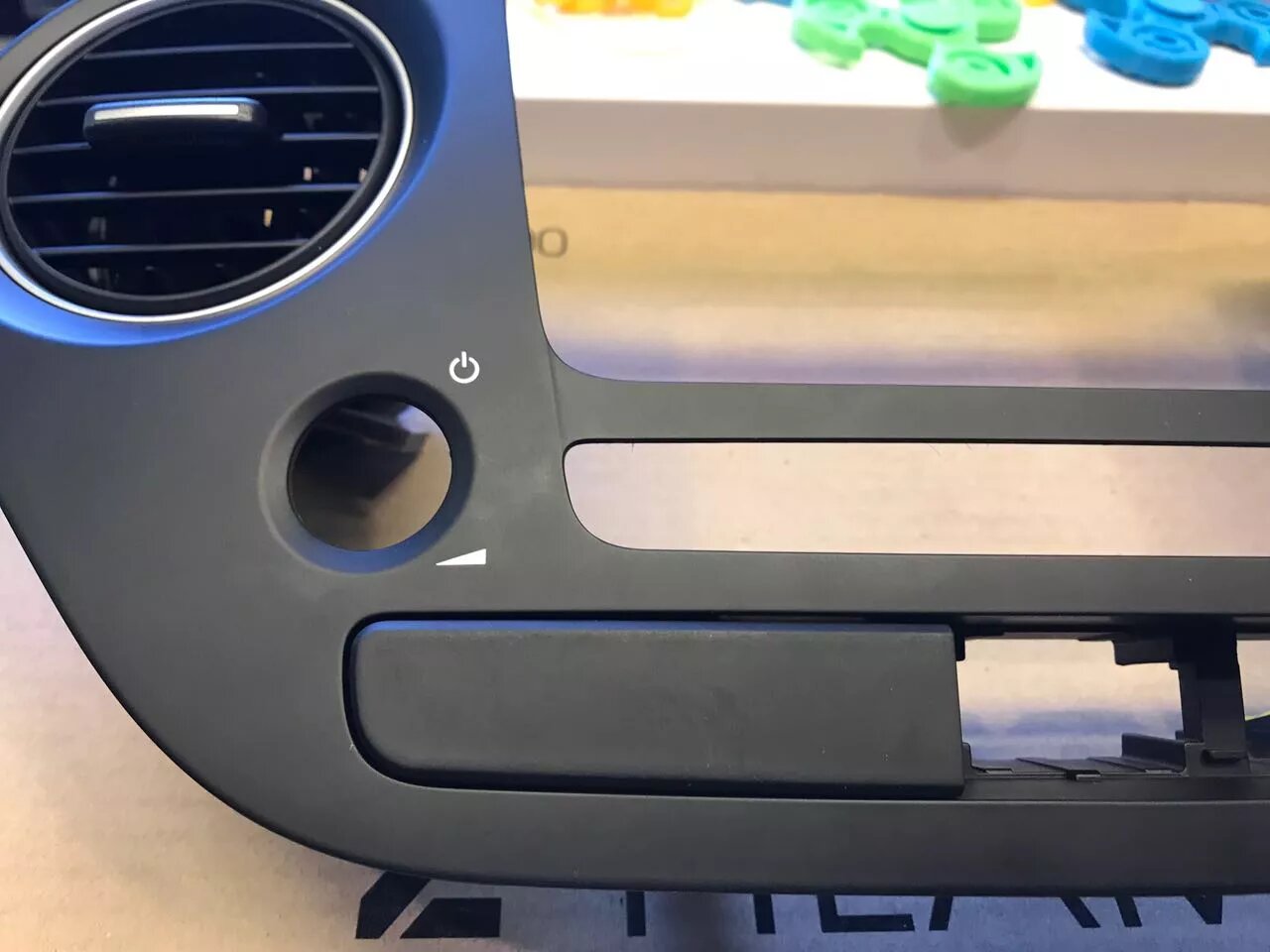
An interior handle on a twelve-year-old car breaks. The importer says the part is no longer brought in, the breakers do not have one, and the car itself is still excellent. It is a situation that repeats every day – and since 3D printing and scanning arrived, it has an answer.
In the automotive world 3D printing works on two levels: reproducing and producing parts that can no longer be obtained, and taking weight out of new parts that have no other production route. This page explains what we make for the automotive sector and how the reverse engineering process works.
Reading time: 4 minutes
The short version
- Reverse engineering makes it possible to produce spare parts that went out of production – the existing part (or what is left of it) is scanned, a model is built, and the part is made.
- Printing takes weight out of parts that could not be made any other way, through hollow structures and internal lattices.
- Material selection is the critical decision: a part in the cabin, a part in the engine bay and a part exposed to the sun call for completely different materials.
- Jigs and fixtures for assembly lines and workshops are a particularly fast and economical application.
- Safety-related parts and components subject to vehicle regulation need separate assessment – explained below.
Spare parts that cannot be obtained
This is the most requested application in the automotive world. Older cars, classic cars, specialist fleets and industrial machinery all suffer from the same problem: the part exists, but nobody makes it any more.
Our process:
- 3D scanning of the original part, even if it is broken or incomplete
- Reverse engineering – building an accurate 3D model and repairing the missing areas
- Improving the design where needed – a part often broke because of a weak design that can be strengthened
- Production in 3D printing or in CNC, in a material suited to the conditions of use
What else we make for the automotive sector
- Prototypes for automotive technology companies and component suppliers
- Housings and mounts for sensors, cameras and installed electronic equipment
- Jigs and fixtures for assembly lines, workshops and test laboratories
- Custom interior components – mounts, covers, adapters and bespoke fitting solutions
- Lightweight parts for motorsport applications and specialist vehicles
- Models and mock-ups for exhibitions, presentations and aerodynamic testing
Material selection – the decision that determines whether the part survives
A vehicle is a harsh environment: direct sun, extreme temperatures in the engine bay, constant vibration, oils and fuels. A part given the wrong material will fail within months.
| Where the part sits | The challenge | Suitable materials |
|---|---|---|
| Cabin | UV exposure, temperature swings, appearance | ASA, nylon, PA12 |
| Engine bay | High heat, oils, vibration | PEEK, ULTEM, carbon-fibre nylon |
| Exterior | Sun, rain, stone chips | ASA, reinforced nylon |
| Metal parts | High mechanical load | Aluminium, stainless steel, titanium |
| Jigs and tooling | Repeated use, durability | Nylon, PA12 |
Safety-related parts and regulation
This is worth saying plainly: a component that affects vehicle safety, or that is subject to vehicle regulation, is not something to produce without proper assessment. We manufacture to the specification and requirements the customer defines, and are glad to help with material selection and design – but certifying a part as fit for road use rests with the body authorised to do so. For interior parts, accessories, jigs, prototypes and non-safety components, the route is simple and quick.
Frequently asked questions
I have a broken part and no file. Can it be reproduced?
Yes. What exists is scanned, the missing areas are completed in the model, and a new part is produced. In many cases the area that broke can also be strengthened.
Will a printed part survive in the engine bay?
That depends entirely on the material. Materials such as PEEK and ULTEM are made for high temperatures. A standard material will not last there, which is why we choose the material by where the part sits and what it has to survive.
Can I order a single part?
Yes. One of the advantages of 3D printing is that no tool is needed, so producing a single unit is both possible and economical.
Selected automotive projects
Have a part to reproduce or produce?
Send a file, photographs of the part or a description of the problem – and the team will come back with an approach and a quote.

About the author
The Indus3D team runs an industrial 3D printing factory in Kiryat Shmona, Israel, working with customers across the automotive sector, the defence and aerospace industries, medicine, architecture, startups and private clients. The team’s experience spans a range of printing technologies including DLP, MJF, SLA, PolyJet, SLS and FDM, along with full support from the file or the idea through to the finished part.