
A part breaks in the field. There is no drawing for it, the original manufacturer stopped supplying it seven years ago, and the system stays down until someone finds an answer. It is one of the most common situations that reaches us from the defence industry – and it is usually resolved in days rather than months.
The Israeli defence industry does not compromise on suppliers. A part that arrives late, out of tolerance, or in a material that will not survive field conditions costs far more than its price. This page explains what we produce for the defence and aerospace industries, why drones and UAVs are where 3D printing makes the largest difference, and what the process looks like from the moment your file reaches us.
Reading time: 5 minutes
The short version
- Indus3D is an approved supplier to the Israeli Ministry of Defense, certified to AS9100 – the quality standard of the aerospace, space and defence industries – and to ISO 9001.
- Production is entirely in house, with no subcontractors. The files you send do not leave Israel – a decisive consideration when the model itself is sensitive information.
- On drones and UAVs every gram counts. 3D printing produces hollow structures and internal lattices that no other process can make, taking weight out without giving up strength.
- 3D scanning, reverse engineering and production in the same place make it possible to reproduce parts that have no drawing and that the original manufacturer no longer supplies.
- The range of technologies – MJF, SLS, SLA, FDM, PolyJet, metal printing and CNC – means the process is chosen to suit the part, rather than the part being adapted to the process.
An approved supplier to the defence industry – what that means in practice
Procurement in the defence and aerospace industries runs through a filter of quality requirements that most suppliers do not meet. Indus3D is an approved supplier to the Israeli Ministry of Defense, and holds the two relevant quality certifications: AS9100, the standard written for the aerospace, space and defence industries, and ISO 9001.
In practice that means the control, documentation and traceability processes behind every order are built in advance to satisfy defence procurement – not retrofitted to each project after the fact.
Why an Israeli supplier, and why it matters particularly here
With a defence part, the file itself is sensitive information. Sending a 3D model to a production platform abroad or to a global marketplace is a risk that usually cannot be taken, and is sometimes not permitted at all.
Here the file does not leave the country and does not pass to subcontractors. All production is done by us, by a team used to working to the requirements of the Israeli defence industry.
For more on why local production beats a global marketplace in the first place, see 3D printing in Israel.
Drones and unmanned aerial vehicles
Drones and UAVs are now one of the defence industry’s main engines, and also one of the areas where 3D printing gives the largest advantage.
The reason is simple: in an aircraft, every gram counts. 3D printing makes hollow structures, internal lattices and geometries that cannot be produced by any other method, taking weight out without giving up strength. At the same time, a development cycle where each version is made in days rather than weeks changes the pace of the whole programme.
What we produce for drones
- Drone bodies, arms and propeller guards
- Housings for optical payloads and sensors
- Mounts and adapters for cameras and specialist equipment
- Lightweight internal components
- Prototypes for fast iteration between versions
- Jigs and fixtures for assembly and testing
- Small and medium production runs
- Spare parts for aircraft in service
Other applications in the defence industry
- Functional metal parts – in metal printing, for components that have to carry load
- Electronics housings and protective components for field equipment
- Jigs, moulds and fixtures for production and assembly lines
- Spare parts for ageing equipment – including reproducing parts that have no drawing
- Demonstration models for mission study, training and exhibitions
- Small-run production – where the quantity does not justify a mould
A part with no drawing? There is a way
One of the most common pains in maintaining older systems: a part breaks, there is no file, no drawing, and the original manufacturer no longer supplies it.
The whole route is in house here:
- 3D scanning of the original part
- Reverse engineering – building an accurate 3D model
- Production – in 3D printing or in CNC, whichever the part calls for
The result: a replacement part available, without waiting for a manufacturer who may no longer exist.
Technologies and materials
We are not limited to one technology. We choose the process to suit the part, not the other way round.
Technologies available: MJF, SLS, SLA, FDM, PolyJet, DLP, metal printing and CNC machining.
| Material | Key characteristic | Typical use |
|---|---|---|
| PEEK | Resistant to heat, chemicals and mechanical load | Engineering components in extreme conditions |
| Nylon / PA12 | General strength and durability | Functional parts and jigs |
| Carbon-fibre nylon | A high strength-to-weight ratio | Drones and aircraft |
| Aluminium and stainless steel | High mechanical strength | Load-bearing metal parts |
| Titanium | High strength at low weight | Aerospace and defence applications |
How we work with you
- You send a file along with the material requirements, the tolerances and the quantity
- Engineering review – an engineer examines the model and confirms it can be produced
- Quote and lead time
- Production and quality control – all of it here
- Delivery
Confidentiality and information security
The files you send stay with us. We do not pass models to subcontractors or to external platforms, and we are ready to sign confidentiality agreements to your organisation’s requirements.
Frequently asked questions
Are you an approved supplier to the Israeli Ministry of Defense?
Yes. Indus3D is an approved supplier to the Israeli Ministry of Defense, certified to AS9100 and ISO 9001.
Which drone parts do you produce?
Drone bodies, arms, propeller guards, housings for optical payloads, equipment mounts, lightweight components, assembly jigs and spare parts – as prototypes and as production runs.
Do our files stay in Israel?
Yes. Production is entirely in house, with no subcontractors and nothing passed to parties abroad.
Can you produce a part that has no drawing?
Yes. Using 3D scanning and reverse engineering we build a model from the existing part and produce a new one from it.
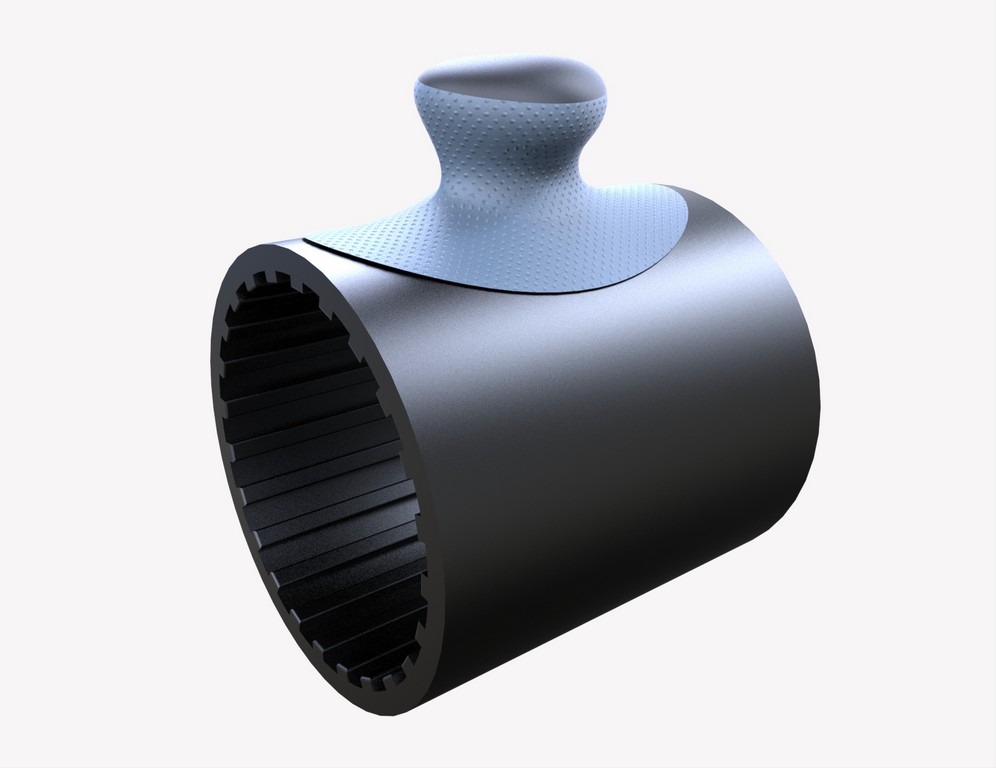
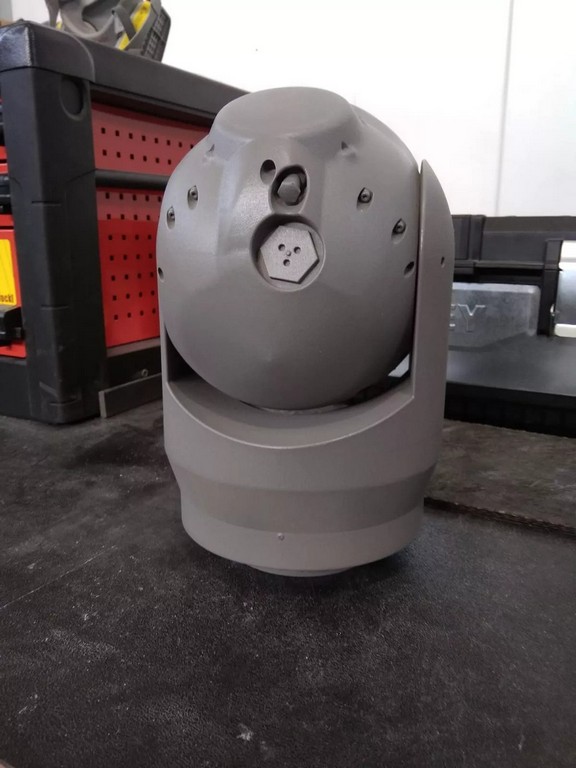
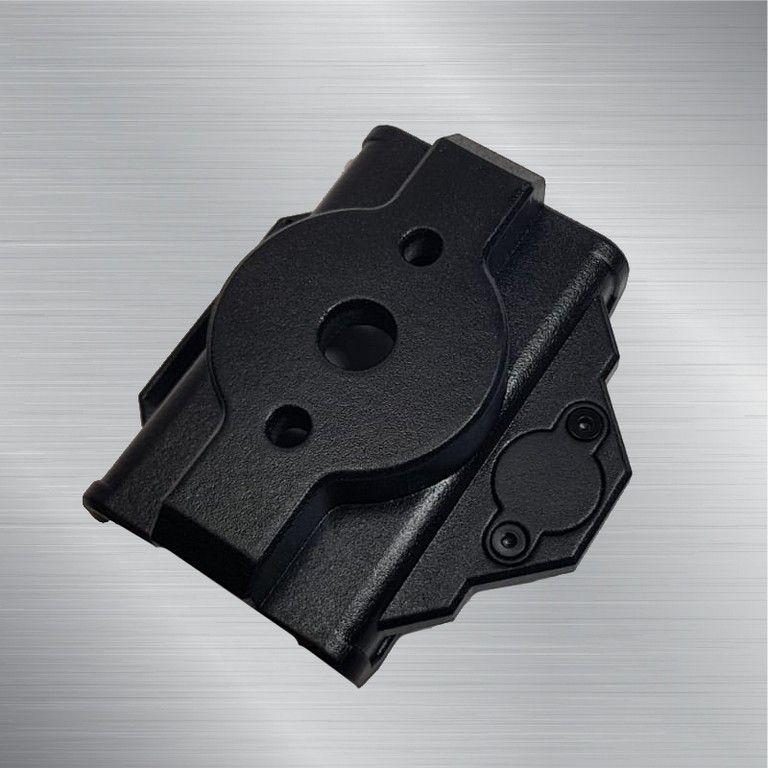
Selected defence projects
Have a part you need made?
Send an STL, STEP or OBJ file with your requirements. The team will come back with a quote setting out technology, material and cost – with no obligation.
About the author
The Indus3D team runs an industrial 3D printing factory in Kiryat Shmona, Israel, working with customers across the defence and aerospace industries, medicine, architecture, startups and private clients. The team’s experience spans a range of printing technologies including DLP, MJF, SLA, PolyJet, SLS and FDM, along with full support from the file or the idea through to the finished part.